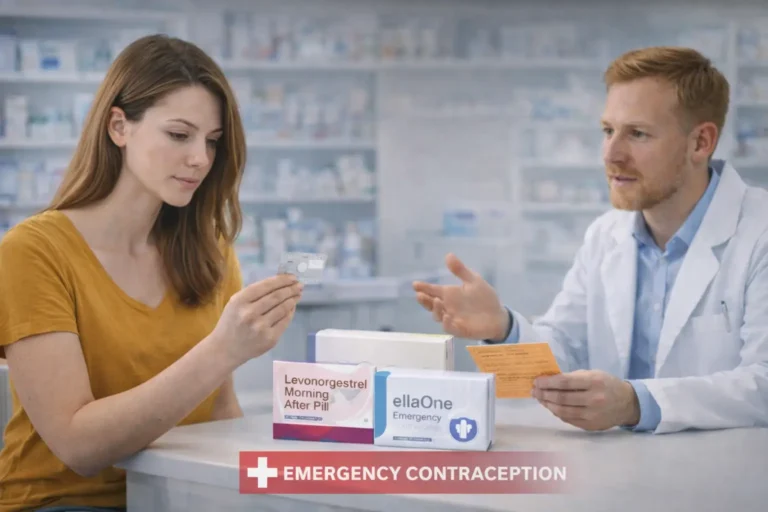

If you are breastfeeding and need emergency contraception, tell the pharmacist or clinician that you are breastfeeding and how long it has been since you gave birth. These details can affect which emergency-contraception options are considered and what follow-up advice is appropriate.
It is also useful to mention your baby’s age, whether your baby was born full term and is generally well, when the unprotected sex or contraceptive failure happened, any regular medicines or herbal products you take, your current contraception, and whether your periods have returned.
Why Does the Time Since Giving Birth Matter?
Pregnancy can happen again from 21 days after giving birth, even if you are breastfeeding and your periods have not returned. This means breastfeeding alone should not be assumed to protect against pregnancy.
Current UK specialist guidance says oral emergency contraception can be considered from day 21 after birth. A copper intrauterine device (IUD) can be used for emergency contraception from day 28 after birth and may also provide ongoing contraception if it is suitable for you.
Why Should You Mention Breastfeeding?
Breastfeeding is relevant because medicines can pass into breast milk in different amounts, and recommendations may differ between emergency-contraception options. A pharmacist or clinician needs this information to weigh the available choices and give advice that fits your circumstances.
Breastfeeding status is only one part of the assessment. Timing since unprotected sex, your medical history, current medicines, recent hormonal contraception and whether further unprotected sex has occurred can all affect the recommendation.
Levonorgestrel and Breastfeeding
Levonorgestrel is one of the medicines used for oral emergency contraception. NHS Specialist Pharmacy Service guidance states that a single dose can be used during breastfeeding from day 21 after birth and that interruption of breastfeeding is not necessary after a single dose. A copper IUD is another option and is preferred in many situations when it is suitable and can be fitted in time.
Ulipristal Acetate and Breastfeeding
Ulipristal acetate is another oral emergency-contraception medicine. Current UK specialist guidance says it can be considered during breastfeeding from day 21 after birth. In January 2025, the Faculty of Sexual & Reproductive Healthcare stated that no interruption of breastfeeding is necessary after a single dose used for emergency contraception.
Some current medicine product information still advises avoiding breastfeeding for one week after ulipristal acetate. Because specialist UK guidance and some product information are not fully aligned, this is a good example of why you should tell the pharmacist that you are breastfeeding and follow the advice given for the exact medicine and your individual situation.
What Else Should You Tell the Pharmacist or Clinician?
- When the unprotected sex or contraception failure happened.
- How long it has been since you gave birth.
- That you are breastfeeding, and any concerns about feeding or milk supply.
- Your baby’s age and whether your baby was born full term and is generally well.
- Whether your periods have returned since the birth.
- What contraception you are currently using and whether any pills, patches, rings or injections were late or missed.
- Any prescription medicines, over-the-counter medicines or herbal products you use.
- Any relevant medical conditions or allergies.
- Whether you have already used emergency contraception during this cycle.
What About Ongoing Contraception After Having a Baby?
Emergency contraception only deals with a specific pregnancy-risk event; it does not provide ongoing protection for the rest of the cycle. If you do not want another pregnancy yet, ask about a regular method that is suitable after childbirth and while breastfeeding.
Several contraceptive methods can be started soon after birth, including progestogen-only methods. The best option depends on your health, breastfeeding, preferences and how recently you gave birth.
Emergency Contraception in Lower Stondon
If you are in Lower Stondon and need time-sensitive advice, see Henlow Pharmacy’s emergency contraception in Lower Stondon page. Seek advice promptly rather than delaying while you work out which option might be suitable.
Frequently Asked Questions
What should you mention about breastfeeding when seeking emergency contraception?
Tell the pharmacist or clinician that you are breastfeeding, how long it has been since you gave birth, and any relevant information about your baby and your own health. This helps them assess which emergency-contraception options are appropriate.
Does breastfeeding affect emergency contraception advice?
Yes. Breastfeeding and the time since birth are relevant to emergency-contraception assessment. Current UK specialist guidance allows oral emergency contraception from day 21 after birth and a copper IUD for emergency contraception from day 28 after birth.
Why can the time since giving birth matter?
Pregnancy can occur again from 21 days after giving birth, even before periods return and even when breastfeeding. The timing also affects which emergency-contraception methods can be considered.
What information should you mention during an assessment?
Mention when unprotected sex happened, how long ago you gave birth, whether you are breastfeeding, your current contraception, medicines and medical conditions, whether your periods have returned, and any previous emergency contraception.
When should you ask for individual contraception advice?
Seek advice promptly after unprotected sex or contraception failure, especially if you are within the first weeks after birth, are breastfeeding, take regular medicines, or are unsure which option is suitable.
Medical Disclaimer
This article provides general information and does not replace an individual clinical assessment. Emergency contraception is time-sensitive. If you have had unprotected sex or contraception failure, seek advice promptly from a pharmacist, GP, sexual-health service or NHS 111 where appropriate. Do not start, stop or change medicines or breastfeeding solely because of this article.